From Platen to Profit: How Flexpress is Redefining Die-Cutting with Automation
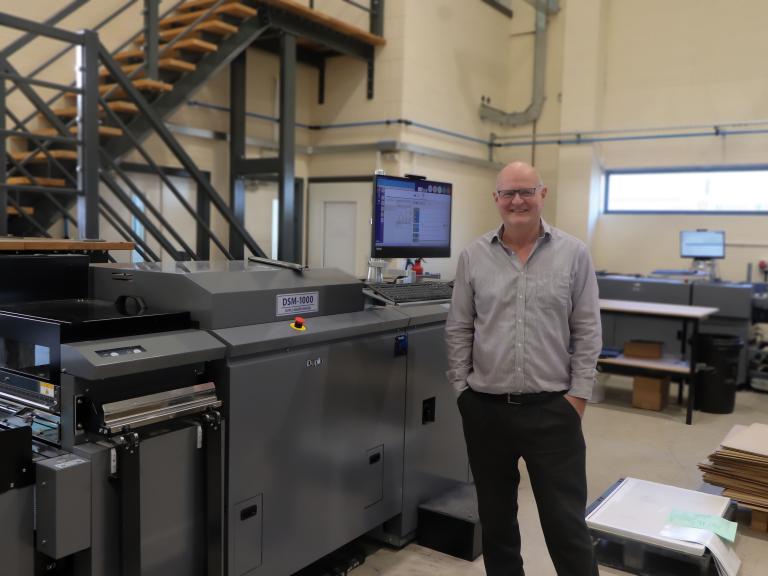
For Leicester-based trade printer Flexpress Ltd, growth has never been about standing still. Under the leadership of Managing Director Steve Wenlock, the business has built its reputation on quality, speed, and a willingness to challenge traditional production thinking. That approach is clearly demonstrated in its recent decision to replace a traditional platen with the Duplo DSM-1000 B2 die-cutter, marking a significant shift in both capability and mindset.
Combined with continued investment across digital print, litho, embellishment and booklet production, Flexpress is building a production environment designed around efficiency, scalability and higher-value print.
Why did Flexpress replace its traditional platen?
At the centre of Flexpress’s transformation was a decision to move away from legacy die-cutting.
“You can pick up a refurbished cylinder or platen machine for £20,000–£25,000. Then you look at something like the DSM and think, that’s a big jump,” explains Steve Wenlock, Managing Director of Flexpress. “But the benefit is not the machine itself. It is what it allows you to do in the same time.”
For Steve, the move was not simply about replacing older equipment. It was about removing a long-standing bottleneck that was limiting the business.
“Our platen was always a bottleneck. It dictated what we could and could not take on,” he says. “If I can reduce the staff time on the old cylinder by 50%, I can redeploy that time elsewhere. That is how you justify it.”
This represented a broader change in mindset for the business.
“Once you stop looking at the price in isolation and start thinking about output, efficiency and opportunity, everything changes.”
What benefits has the Duplo DSM-1000 brought to Flexpress?
The biggest operational gain for Flexpress has been changeover speed and production flexibility.
“Now, once a job is set, especially repeat work like presentation folders, we are changing over in minutes,” says Steve. “Instead of spending time on makeready, we are running jobs. That is the real difference.”
This ability to move quickly between jobs has fundamentally changed how the business approaches production.
“Before, you would think twice about taking certain jobs on because of the setup time. Now, we are actively looking for them.”
The automation and consistency delivered by the DSM-1000 has also helped the business create a more streamlined and repeatable workflow across the finishing department.
What new applications can Flexpress now produce more efficiently?
With faster setup times and greater flexibility, Flexpress has expanded the range of applications it can produce competitively.
“It changes your mindset. You stop avoiding work and start asking what else you can produce,” Steve explains.
The company is now actively exploring and growing areas such as:
- presentation folders
- bottle boxes
- ticket wallets
- hotel key card holders
- shaped and creased print applications
“We are now looking at things like bottle boxes, ticket wallets and key card holders. Products we would not have prioritised before. Because we can produce them efficiently, they become commercially viable.”
This ability to diversify has created new commercial opportunities for the business.
“If we can bring the price down and improve the product, suddenly it becomes much more attractive. That is when demand follows.”
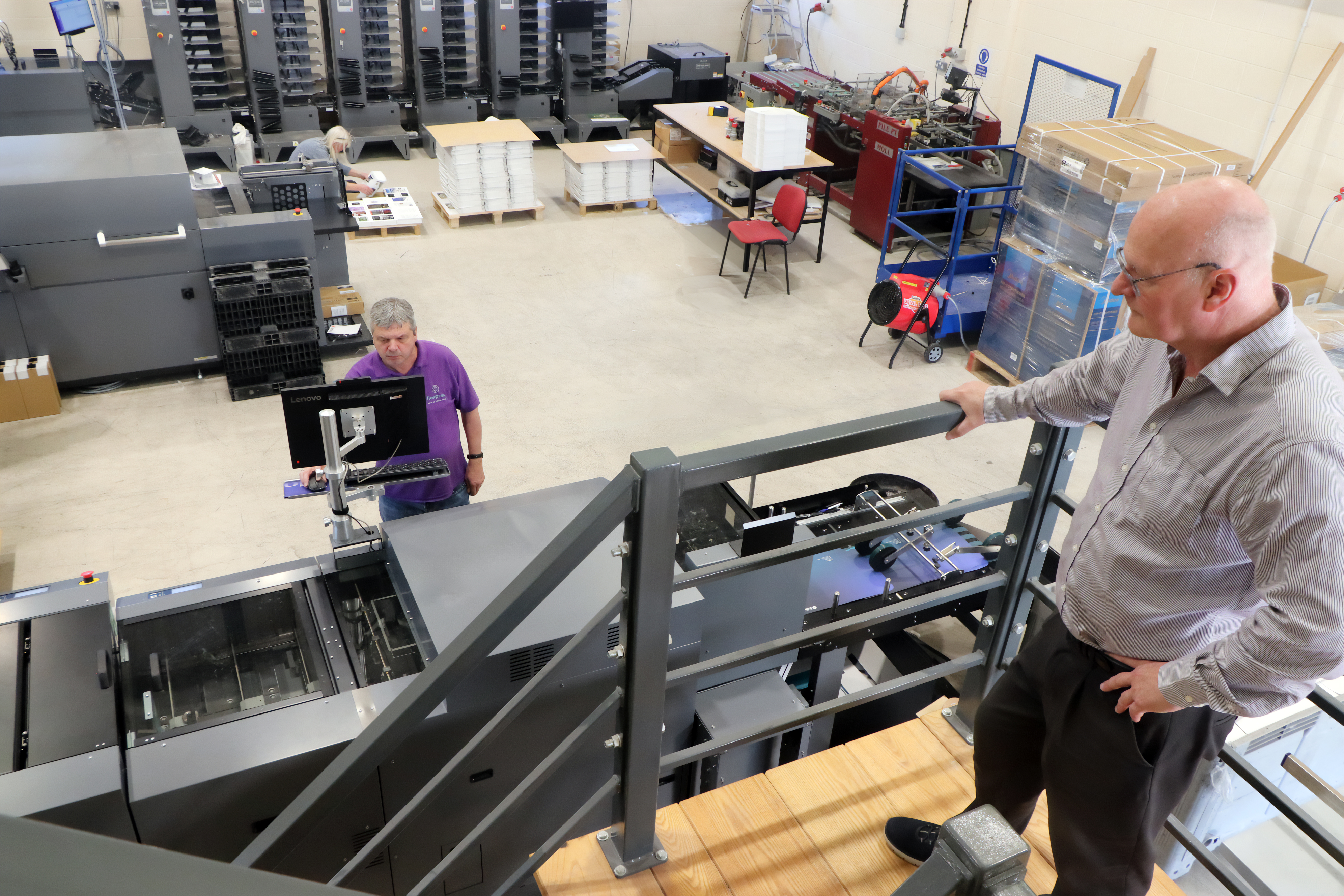
Steve overlooks operations on his DSM-1000 B2 Die-cuter, DC-20K B2 finishing system, DDC-8000 B2 DuSense and DBM-700 Automatic booklet system
How is Flexpress using embellishment to add value to print?
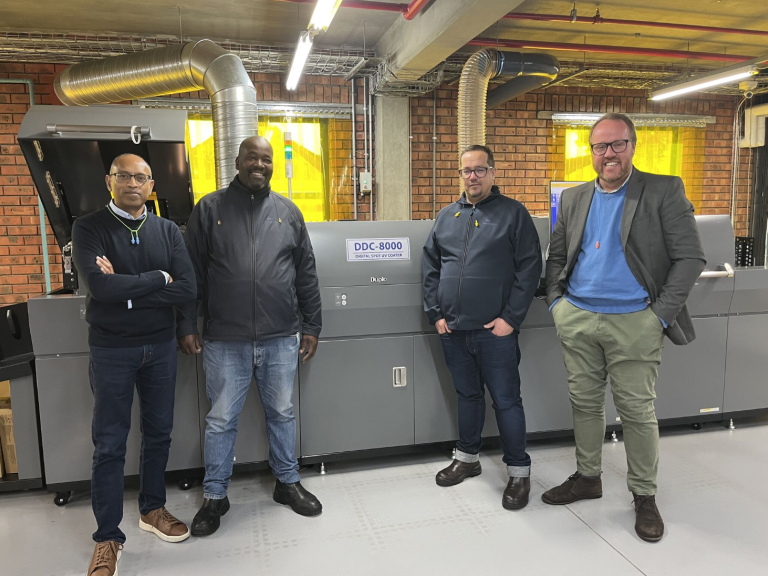
A key part of Flexpress’s premium print strategy comes from its investment in the Duplo DDC-8000 B2 DuSense.
The system allows the company to add raised spot UV and foil effects inline, helping transform standard print into tactile, high-impact applications with greater perceived value.
“We are always looking at how we can make print stand out more,” says Steve. “Adding spot UV and foil allows us to take something ordinary and turn it into something that really connects with the end user.”
By combining texture, gloss and visual contrast, Flexpress is producing applications that not only look different but feel different, helping customers create more engaging and memorable print.
“It gives us the flexibility to add value without slowing production down. That is a big deal.”
The move reflects a growing demand for embellishment across packaging, presentation folders, marketing materials and premium commercial print.
How does Flexpress view automation in modern print production?
For Flexpress, automation is not about replacing people. It is about creating a more resilient and consistent production environment.
“It is not about replacing people. It is about making better use of the people we have,” Steve says.
“You still need knowledge. You still need judgement. But you are removing the repetitive, time-consuming elements.”
This approach allows more of the production team to produce high-quality work consistently, while reducing dependency on highly manual setup processes.
“It means more of the team can produce high-quality work, consistently.”
In a market facing ongoing workforce and production pressures, Flexpress believes modern print businesses need systems that support long-term operational stability.
“You cannot rely on one or two people knowing how to set everything up. You need systems that support the whole team.”
What other investments is Flexpress making?
Flexpress’s investment in finishing forms part of a much wider growth strategy across the business.
Alongside its finishing upgrades, the company continues to strengthen its print capabilities through investment in HP Indigo digital print technology and a new RMGT 970PF-8 litho press.
The RMGT press has been selected to increase efficiency on longer-run work, improve turnaround times and support the company’s expanding B2 production capability.
Combined with its digital print investment, this allows Flexpress to cover a wider range of work while maintaining greater control over quality, scheduling and delivery.
“You have got to focus on the end goal. Standing still is not an option,” says Steve. “We are building the business around where we want to be, not where we have been.”
The business is also restructuring parts of its production environment and workflow to support future growth and improve operational efficiency.
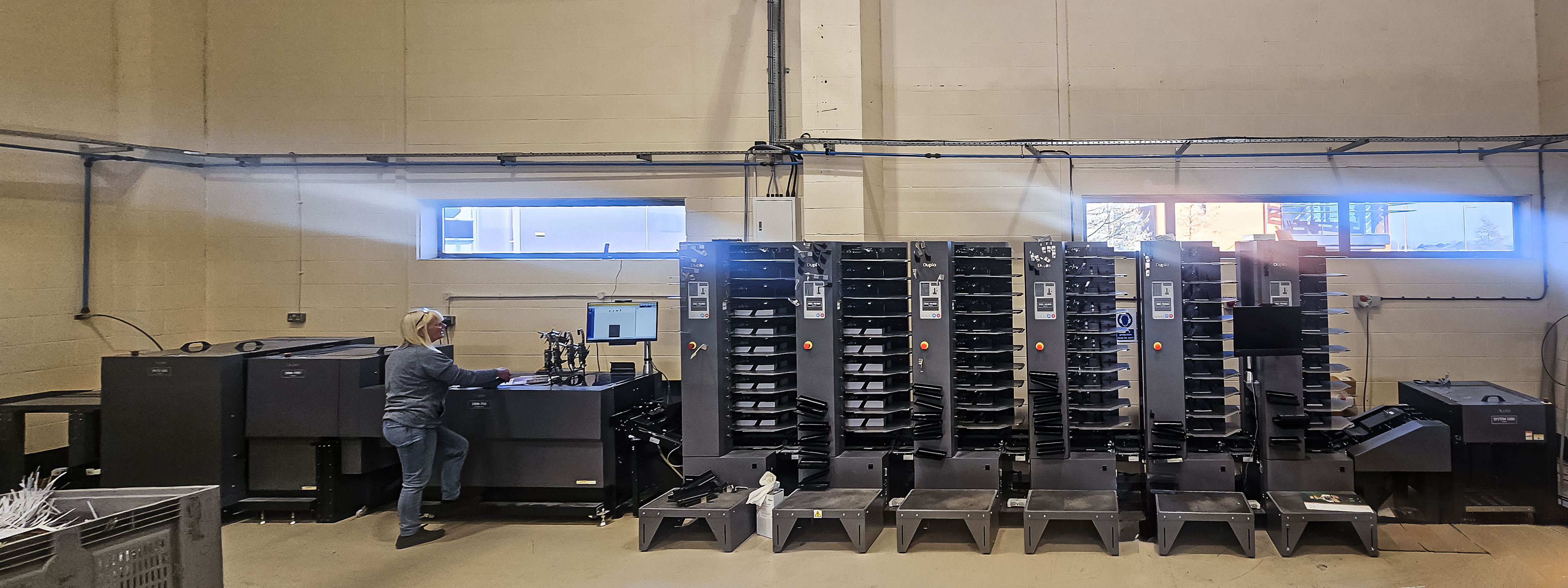
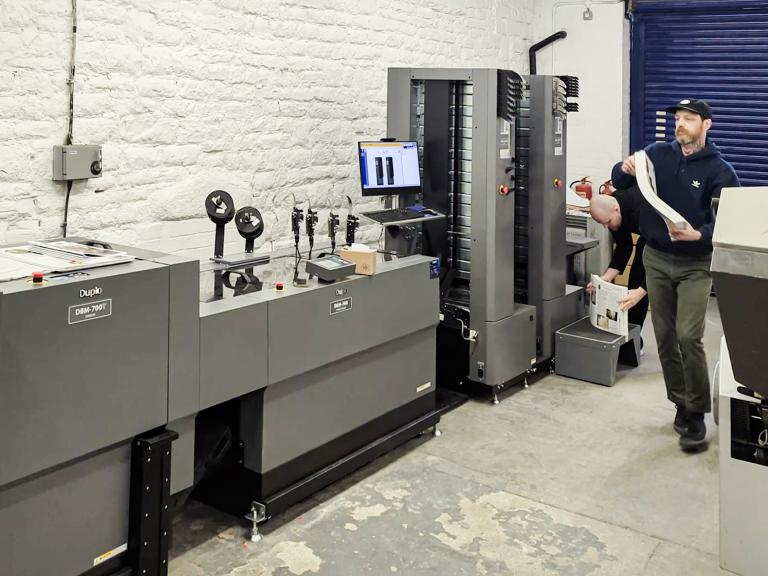
Flexpress's booklet system is largest configurations of the Duplo DBM-700 globally
Why did Flexpress invest in the Duplo DBM-700?
Flexpress has also invested heavily in booklet production, installing what is believed to be one of the largest configurations of the Duplo DBM-700 booklet system globally.
For Steve, the investment was not about scale for the sake of it. It was about building a booklet production system capable of handling increasing demand efficiently and consistently.
“It is not about having the biggest system. It is about having the right system for the work,” he explains.
“We produce a huge volume of booklets, and we need to do that efficiently, consistently, and without complexity.”
The highly automated configuration supports Flexpress’s wider strategy of creating streamlined workflows that can scale with the business.
What does the future look like for Flexpress?
For Martyn Train, Managing Director of Duplo UK, Flexpress represents a business that understands the importance of evolving with the market.
“Flexpress is a great example of a company that understands how to move forward,” says Martyn.
“This is not about replacing traditional methods for the sake of it. It is about creating a production environment that is more resilient, more scalable, and better equipped to handle the demands of modern print.”
“Steve and the team are constantly looking at how they can improve, whether that is through finishing, print, or workflow, and that mindset is what continues to drive their success.”
With continued investment in equipment, workflow and infrastructure, Flexpress is positioning itself for sustained growth in an increasingly demanding print market.
As Steve concludes, “Yes, there is disruption. Yes, there is investment. But you either move forward and adapt, or you fall behind.”