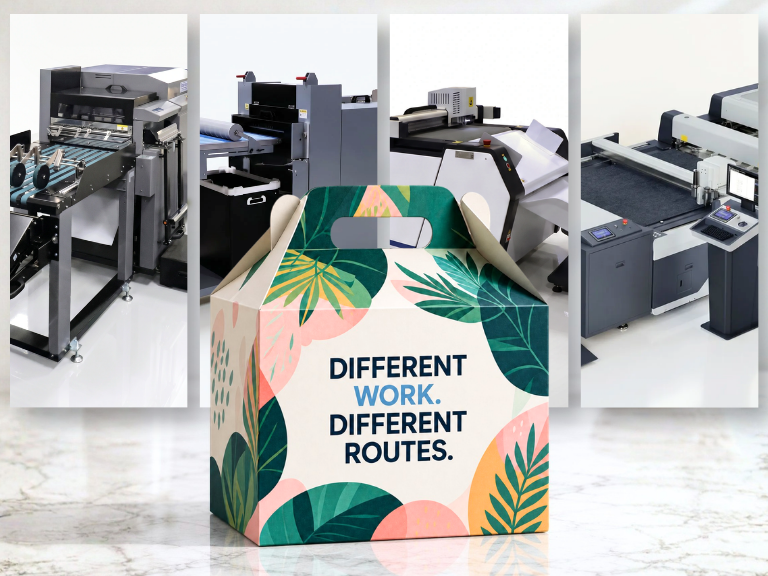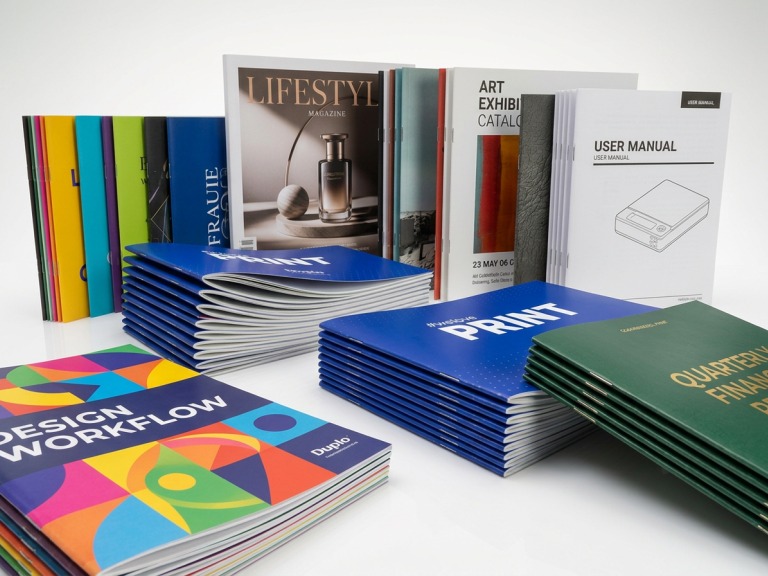
Packaging is one of the most crucial elements of product marketing: it draws the consumer's eye and encourages purchase. In today’s market, digital print finishing is what enables brands and print service providers (PSPs) to compete. Finishing adds tactile appeal, precision and versatility, and makes short runs and personalisation profitable for medium to large print businesses.
A Brief History of Packaging
Packaging has been an essential part of human civilisation for centuries. The packaging industry has roots in the early days of trade and commerce when merchants needed ways to transport and store their goods.
Wooden barrels were the most common storage in the Middle Ages. In the 1900s, people switched from self-made wooden crates and boxes and relied instead on paper and cardboard.
Before the industrial revolution, manufacturers often did packaging by hand. This was time-consuming and expensive and brought about several labour issues. However, new packaging technologies enabled companies to mass produce their products, dramatically reducing costs.
While packaging was primarily used to protect products from damage during transport, the industrial revolution paved the way for mass production and mass marketing. Marketing products to a broad audience became the norm, and as a result, packaging became an essential tool for branding.
Digital print finishing: the step that makes packaging stand out
While digital presses have given PSPs the ability to produce short runs and variable data, finishing is where the difference becomes tangible. Digital print finishing delivers:
- Added perceived value – tactile finishes and embellishments increase shelf presence and justify premium pricing.
- Flexibility – fast setup and digital workflows make multiple SKUs, regional variants and personalisation feasible.
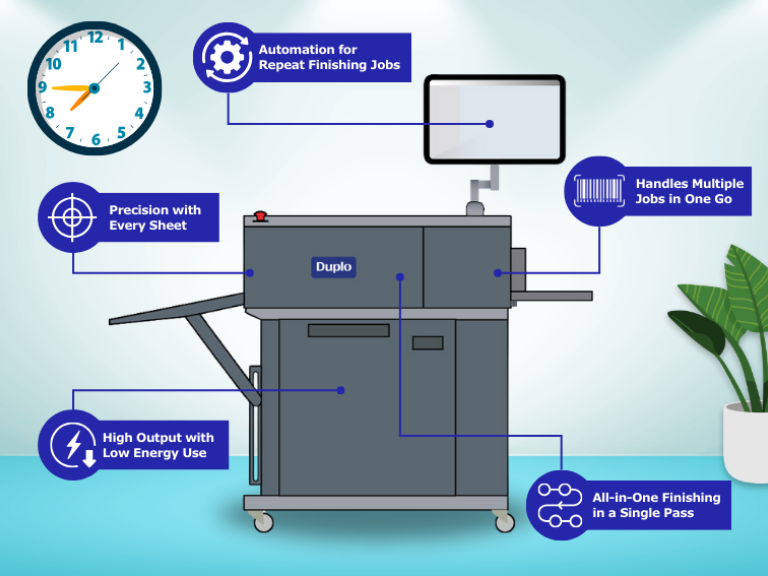
- Efficiency – automated finishing reduces manual touchpoints and speeds throughput, supporting high-volume runs without compromising quality.
- Removes bottlenecks – modern digital finishing keeps pace with press speeds and rapid job changeovers, eliminating the production constraints caused by older finishing equipment.
Embellishment printers: tactile and visual impact
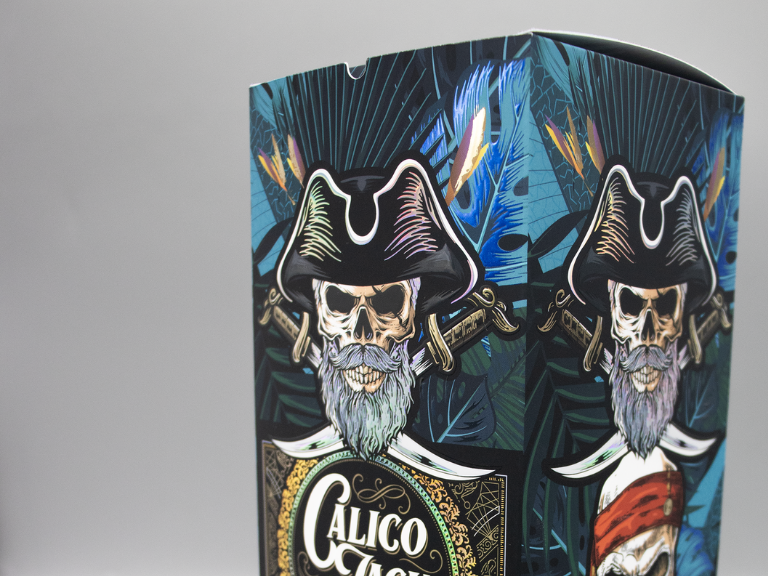
Embellishment systems – such as raised varnish and spot-UV coaters – create textures and finishes that catch the eye and the hand. These systems allow brands to add selective gloss, tactile highlights and visual contrast that make boxes, cartons and labels more engaging. For PSPs, in-house embellishment opens up new revenue streams: premium gift boxes, luxury labels and short-run personalised packaging are all commercially viable when finishing is done well.
Cutting, creasing and die-cutting: accuracy, speed and repeatability
Modern finishing equipment handles complex shapes with accurate registration and minimal waste.
Traditional cylinder die cutters still exist in many print businesses, but hybrid and digital solutions like the DSM-1000 are changing the conversation: designed for easy setup, fast die changes and automated separation, the DSM-1000 lets operators move away from lengthy manual processes. For PSPs this means:
- Faster job changeovers
- Reduced dependency on specialist cylinder operators
- Improved accuracy
- Lower wastage
- the ability to economically produce shorter runs and personalised formats
If your operation still relies on older cylinder technology, evaluating digital die-cutting and creasing options can deliver both labour savings and greater flexibility.
Efficiency and affordability through digital finishing workflows
Digital print finishing reduces setup time and labour compared with traditional analogue finishing. Automated job presets, intuitive PC controllers and digital job retention mean operators can switch between formats quickly and consistently. For businesses balancing cost vs quality, the result is clear: shorter lead times, lower inventory costs and a faster route from artwork to finished pack.
One-of-a-kind designs made practical
Digital finishing removes many constraints of analogue workflows. Variable embellishment, selective foiling, spot varnish and personalised finishes can be combined with print-on-demand to create truly unique packaging at commercial scale. This capability is particularly valuable for test campaigns, limited editions and seasonal lines where short runs and rapid turnaround are essential.
Accuracy, repeatability and automation
Modern finishing systems give PSPs a higher degree of registration control and repeatability. That means fewer reprints, less rework and consistent cut accuracy across batches – critical when producing high volumes or multi-SKU packaging runs.
Seamless automation – from job import to finishing – helps teams eliminate manual touchpoints and ensures every job meets the expected standard. This is how printers balance quality, throughput and cost.
Sustainability considerations
As brands and buyers demand greener packaging, finishing plays a role in reducing waste. Digital finishing supports just-in-time production and smaller inventories, lowering the environmental cost of over-production. Many finishing workflows are also compatible with recyclable and biodegradable substrates, allowing PSPs to combine premium finishes with responsible materials.
What’s next for packaging finishing?
Digital print finishing is now the value-adding stage of modern packaging production. Innovations in embellishment, digital die-cutting, and automated finishing workflows will continue to make premium, personalised and short-run packaging more accessible and profitable.
Find out more about how digital finishing could transform your operation. Contact us to discuss your finishing workflow, request a demo or find your local Duplo distributor.